Showing posts with label circuits. Show all posts

Tuesday, July 10, 2012

Week 5 Day 2

Today was not really a break through sort of day. It was more of a "quiet progress" sort of day. I started out the morning finishing the connector pins and Yixin has been making steady progress on the circuits for the sensor clusters. We are at a stand still on that, however, because the additional probes have not arrived from Atlas yet. Apparently they had some issues with the temperature sensors so they are holding up the whole order. Sadly, we already have three of those laying around here so that was mostly unnecessary.


Jennifer was kind enough to go pick up our Otter Boxes so we could get started.  We are going to use Loctite silicon sealant to fill the gaps and seal up the holes after we pass the wires through but just got approval to go buy it so that will  have to wait. We are also a little concerned about heat build up. We toyed with the idea of putting in a fan but couldn't think of a way to do that and still keep the box water tight. I floated the idea of a glycerin-based counter current heat exchange system but that seems excessive. Besides, Joe talked to Yixin and he said all the components we are using should function fine all the way up to 60 C (140 F) so, even though it gets awfully warm here in Texas, we should be ok.


I know what you are thinking... Why did you go to the trouble of getting waterproof boxes and then IMMEDIATELY cut a hole in the bottom. Well, I'll tell you. The hole doesn't much matter. Once we pass the wires through that hole we are going to seal it up tight with silicon. Just in case it leaks, though, we put it in the bottom. That way any water that finds it's way in can find a way right back out instead of pooling in the bottom. The real reason we needed this box is so that it had a lid that would let us access the hardware inside in case we needed to flash the Arduino again or replace a component but still stay water tight. Make sense now?

When we weren't drilling or brainstorming about the sensor cluster we have been hard at work on our computer. Joe is putting together our poster. Lori is working on the lesson plan and activities. I have been going through the research and tinkering with my sections of the research paper. So, plenty to do but not much of that really makes for interesting photos. Here are some for you anyway...


For those of you following what are fish are doing with baited (get it?) breath, here is an update.

pHDOTemperature# of Fish
Tank 18.407.120.351
Tank 28.347.320.461
Tank 38.317.720.391
Tank 48.437.720.2813


Nothing unusual with these observations considering we are developing a trend with losing fish. We are now down to 16 fish for all 4 tanks. Tanks 1-3 are harboring 1 fish each, in 2 of these tanks we found a couple large fish. Most fish continue to congregate in tank 4 which has no large fish.


Thursday, July 5, 2012

Week 4 Day 4

This morning we had a  very interesting seminar from a gentleman named David who works for the City of Denton doing water quality. He is also a meteorologist for the Navy through the reserves. I will see if I can get his power point to share here.


After that Joe, Lori and I spent most of the day working with Jennifer to improve our soldering skills. We started out making a very simple circuit with an LED and a resistor.


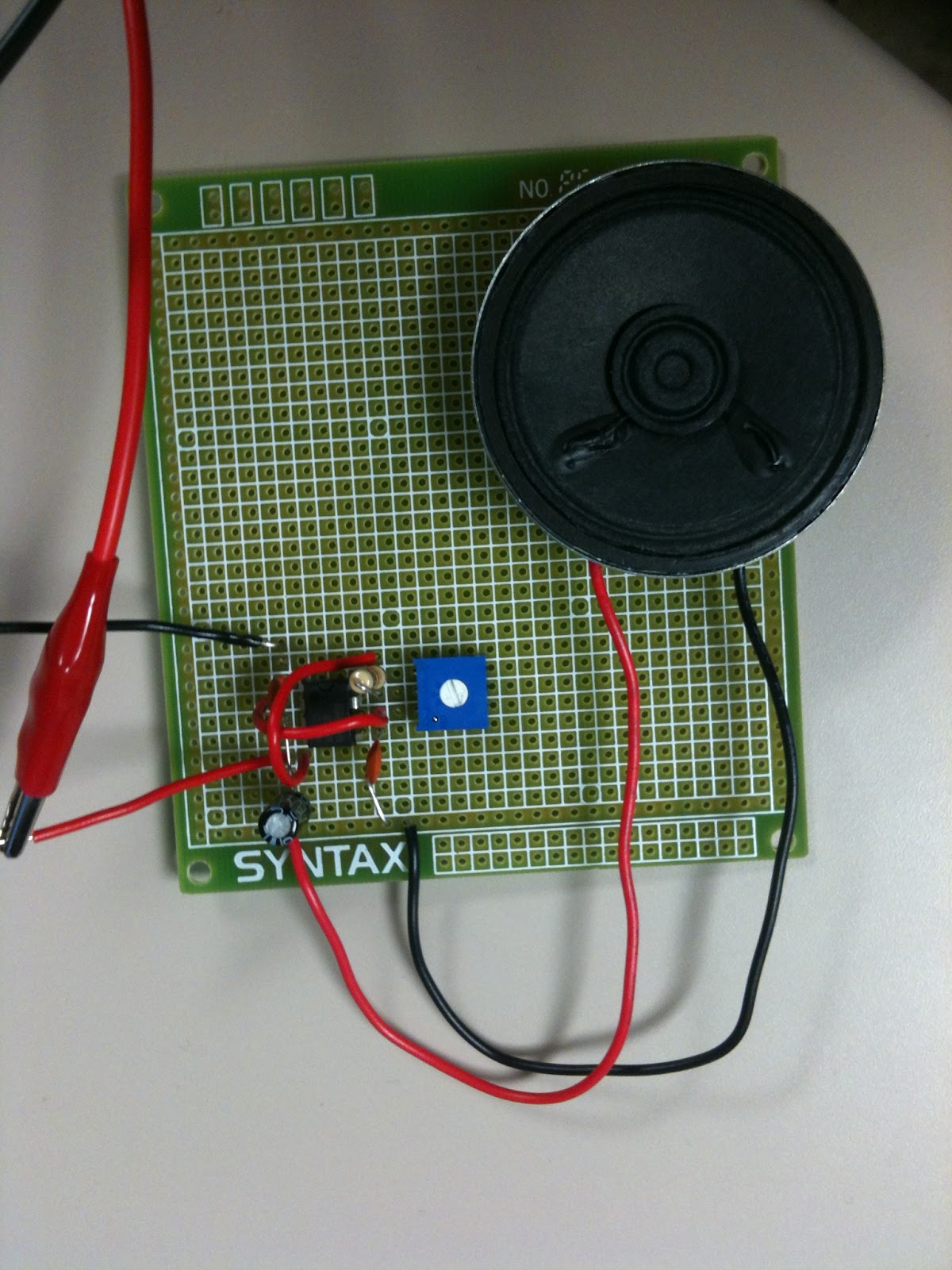
 After that we moved on and mapped out a noise maker circuit and put that together. Lori opted to make hers on a bread board and it turned out very well.


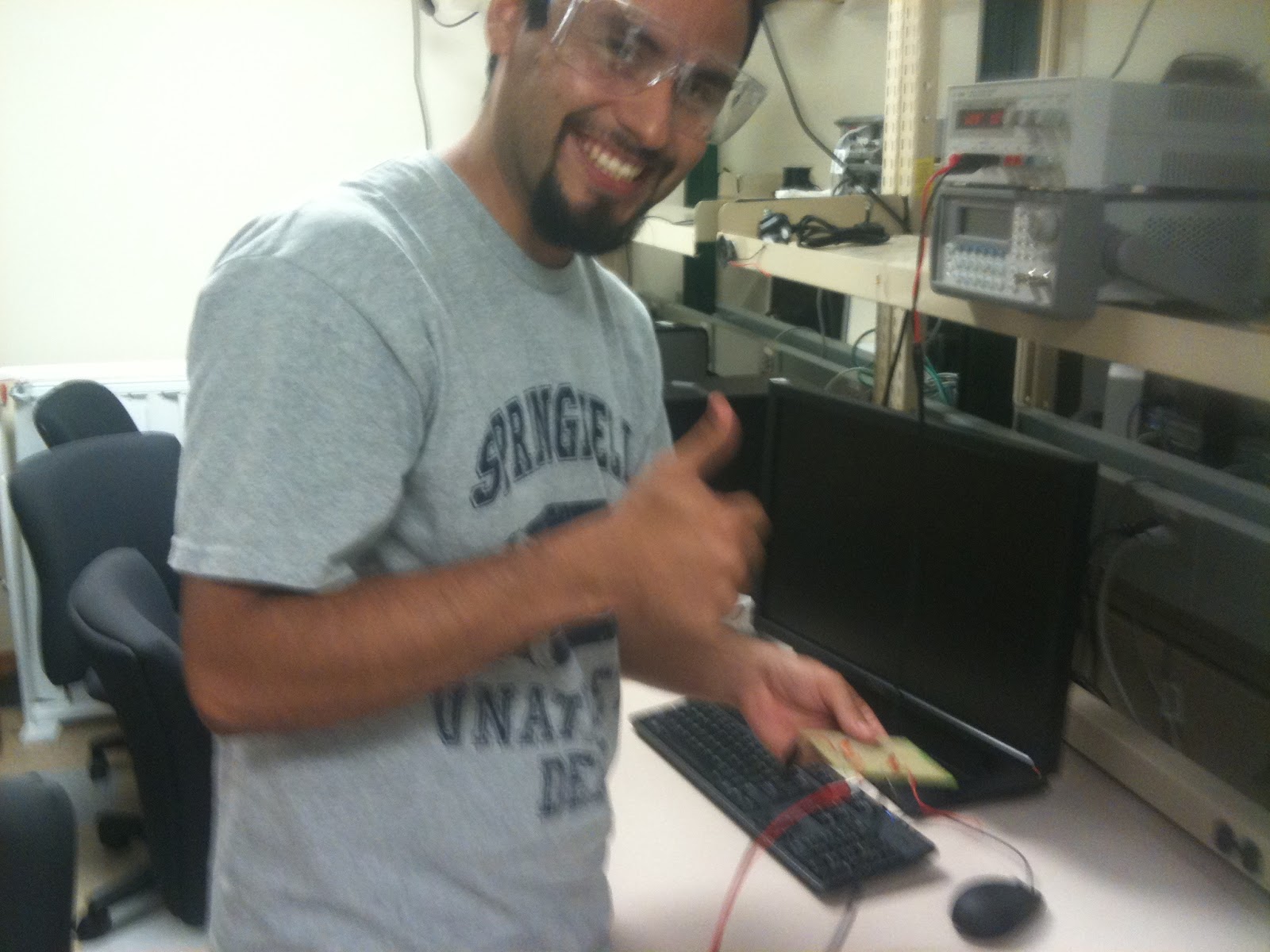
I went with the soldering option. Took a little longer but I am proud of the results. I just wish it was louder...


Lori and Joe have spearheaded accumulating some data from the sensors in the artificial stream. Here is what we have collected:

On Tuesday we managed to get our prototype stream system going with 15 minnows in tank 1 and 20 in tank 4. Zac added an equal distribution of plants to each of the tanks. Our gravel throughout spout created riffles large enough to increase oxygen levels. Fish migrated from tanks 4 to tank 3 and 2 but migration was limited in tank 1. We observed that tanks 2, 3, and 4 riffles have a higher volume of water allowing fish to travel upstream. In order to increase fish mobility between each of the tanks we created small channels in gravel.

Tuesday’s results- 2:30pm:
After setting up our stream we turned on the tank pump and bubbler and took probe readings after 1 hr. (allowing fish to acclimate to environment).
***note, Dr. Hoeinghaus brought his fancy YSI 600 to help us compare Spark to something professional grade. We measured our stream system and both pH and Temperature were spot on but DO measured higher- 10.


pHDO (mg/L)Temperature (C)
Tank 18.278.425.4
Tank 28.218.325.43
Tank 38.158.225.48
Tank 48.23823.32


Fish Behavior:
When we initially added fish to tanks we observed very little to no movement. After about 5-10 min fish began to move around. After 30 min we saw fish in groups of 3-4 move very slowly through riffles in tanks 4 to 3. Four would move halfway across, 3 would retreat, and only one would make it all the way through. Sharron predicted that the bigger minnows were pregnant females and interestingly enough we observed that they would stay closer to the floor of the tanks.

As we suspected, tank number 1, which has the bubbler hose, has the highest DO concentration decreasing in tanks 2, 3, then 4. pH was all over the place- no consistency. Tank 4, which has the pump motor seemed to have the lowest temperature. We turned off pump over our 4th of July break (a total of 36 hrs.) and took the following readings:

Thursday- 9:30am

pHDO (mg/L)Temperature (C)
Tank 18720.32
Tank 287.420.31
Tank 387.620.31
Tank 487.420.3


We observed that tank 3 has the highest concentration of plant matter and also higher DO. We suspect these are directly linked. Lori noted that lights were off during this period so photosynthesis would have decreased (although experiments show room lights have little influence on photosynthesis; the greatest contributor to photosynthesis is our sun) but cell respiration would have increased. We also observed tank 4 has the highest number of minnows. This again would yield a lower DO although minnows can gulp up air from the surface when exposed to harsh conditions.
Our next step will be to  measure again once the pump and bubbler have been on for two hours to compare data.

11:30am

pHDO (mg/L)Temperature (C)
Tank 17.867.820.1
Tank 27.97.220.14
Tank 37.97.720.09
Tank 47.97.320.05


As expected after running the pump for 2 hrs. DO levels rose in a couple of the tanks. Tank 1, which has bubbler, rose significantly +.8. Tank 2, -.2. Tank 3, +.1. And Tank 4, -.1. No consistency here. I think what’s happening is that fish are migrating from tank to tank which fluctuates DO levels. Also, Spark probes might not be giving accurate data.

2:30pm

pHDO (mg/L)Temperature (C)
Tank 18.077.520.12
Tank 28.037.420.07
Tank 38.037.120.07
Tank 487.720.08


Another set of data with varying numbers- no consistency. My next thought is volume of water affecting concentration of DO.